
- admin
- September 18th, 2026
November 20th, 2026
- admin
- November 20th, 2026
Gold and Silver Have Fallen. Wasn't This What We Were Talking About?
Markets move in cycles. What looks like a spectacular opportunity today can look very different a few months later.
A few months ago, gold was making headlines for all the right reasons. Prices were hitting record highs, investors were increasingly looking at gold as an alternative to equities, and the familiar question was beginning to emerge: Should we be allocating more to gold?
In our earlier article, "Gold Is Shining. Equity Isn’t. So What Should You Do?" (https://finandme.com/view-blog.php?id=200), we discussed precisely this temptation.
Our point was simple: gold had its reasons to rise, but that did not mean the rally would continue indefinitely. Prices could correct, move sideways or go through a period of underperformance. Everything moves in cycles, and eventually, prices tend to move towards more sustainable levels.
We are now seeing that play out.
From record highs to a sharp correction
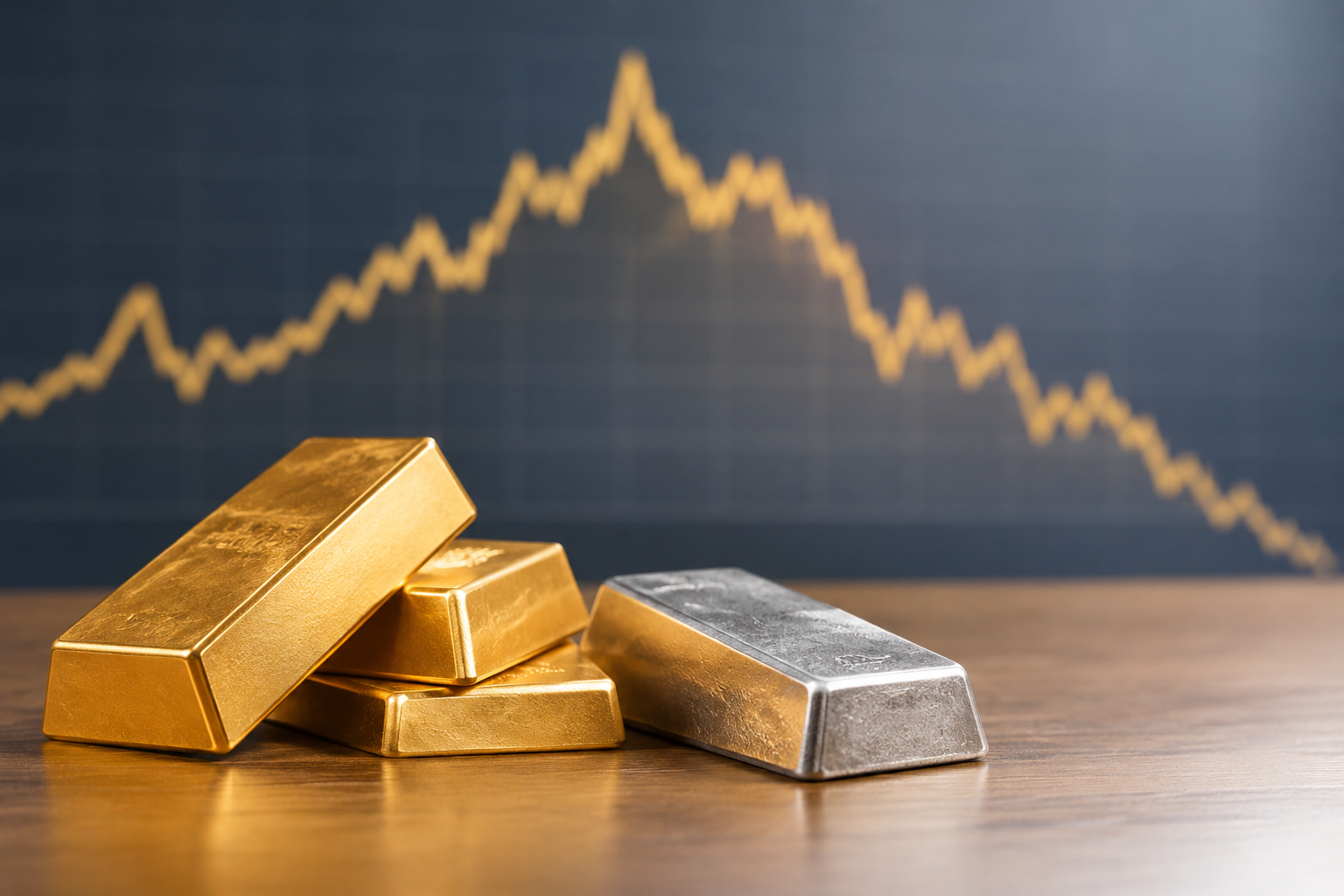
Gold touched approximately $5,600 per ounce in January 2026. By November 18, it had fallen to around $3,796, a decline of over 30% from its peak.
Silver has witnessed an even sharper correction. After touching approximately $121 per ounce, it has fallen to around $46, losing more than 60% from its peak.
The reasons include changing interest-rate expectations in the US, a stronger dollar, rising bond yields, geopolitical developments and profit-booking following an extraordinary rally.
Interestingly, even events that would traditionally be expected to support gold as a safe-haven asset have not necessarily translated into higher prices this time around.
This is a useful reminder that no asset class moves in just one direction.
Everything comes back to the mean
When an asset performs exceptionally well for a period, it is natural for investors to start believing that the trend will continue.
But markets rarely work that way.
There are periods when an asset class significantly outperforms others. Money flows into it, investor interest increases, valuations or prices stretch, and expectations become increasingly optimistic. At some point, the momentum changes.
What follows could be a correction, consolidation or a prolonged period of underperformance.
This happens across asset classes. Commodities, equities, real estate and even individual sectors experience such cycles.
The recent sharp movements in gold and silver look particularly dramatic because the world has been through an unusual sequence of events since COVID-19. Wars, geopolitical tensions, supply-chain disruptions, inflation and changing global monetary policies have all contributed to sudden movements in asset prices.
But the underlying principle remains the same. Markets go through cycles, and periods of extraordinary performance are rarely permanent.
Why we look at equity and debt differently
When building a long-term investment portfolio, we believe equity and debt offer a more understandable and structured foundation.
Equity provides participation in the growth of businesses and the economy. It comes with volatility, sometimes significant, but it also offers the potential to build wealth over long periods.
Debt, on the other hand, generally provides greater predictability and relative stability, depending on the instruments chosen. It helps balance the volatility that comes with equity.
Together, these two asset classes can form the foundation of a well-diversified portfolio.
Gold and other commodities can have a place in an investor's overall asset allocation, depending on their objectives and preferences. However, they are driven by a different set of factors, including global demand and supply, currencies, interest rates and geopolitical developments.
Unlike equity, gold does not represent ownership in a business or its future earnings. Its price is largely dependent on what someone else is willing to pay for it.
That distinction matters when we are building wealth over the long term.
Don't confuse a recent trend with a long-term strategy
If we look at the performance of different asset classes over extended periods using measures such as CAGR or XIRR, the picture can be very different from what recent years might suggest.
The relative performance of asset classes changes depending on the period considered. There is no guarantee that the best-performing asset of the last three or four years will continue to outperform over the next decade.
A few exceptional years are only a small sample of a much longer investment journey.
Bubbles can form, prices can rise sharply, and corrections can be equally sudden. Sometimes these movements are driven by genuine changes in fundamentals; at other times, sentiment and global events play a much larger role.
The important thing is not to keep shifting our investment strategy every time one asset class becomes the flavour of the season.
The takeaway
Gold's recent correction is a reminder of something we discussed earlier: everything goes through cycles. No asset class deserves an unlimited allocation simply because it has performed exceptionally well in recent years.
At Fin & Me, we continue to believe that a thoughtfully constructed equity and debt allocation, aligned with an investor's goals and time horizon, is a more dependable foundation for long-term wealth creation.
Discipline, diversification and staying invested in a well-defined plan matter far more than chasing the asset class that is shining today.